News · Mikołaj Skubina · 11.03.2026
An oil leak from a gear unit is a signal that should not be ignored. Even slight seepage can indicate a problem with the sealing, an incorrect installation position, excessive temperature or the wrong oil level. NORD explicitly states that in the event of a leak you should check the oil quantity, the condition of the seals, the venting, the mounting position, the operating temperature and the ambient conditions.
In practice, a failure rarely starts with “the oil itself”. The source of the problem is often a combination of several factors: worn seals, contamination in the shaft area, overheating, overloading, or operating the drive in conditions other than those intended at the selection and installation stage. SPEC SERWIS carries out inspections, oil changes, the rectification of faults such as leaks, and condition assessments of geared motors both at the customer's site and as part of workshop repairs.
Why a geared motor starts losing oil
Most often, an oil leak from a gear unit does not have a single cause. It is usually the result of operational wear or an installation or servicing error.
A very common reason is wear of the rotary shaft seal. Over time, the sealing lip loses its elasticity, and the mating surface can wear or become contaminated. In dusty environments the problem escalates faster, which is why NORD recommends selecting seals suited to the operating conditions, for example versions with additional protection in harsh environments.
The second group of causes relates to oil. Too high a lubricant level can increase pressure and push oil out through the seals. A similar effect can be caused by the wrong type of oil, or by changing the installation position without correcting the oil quantity and the position of the inspection points. NORD points out that after changing the mounting version, the oil level and the position of the venting must be adjusted.
Another factor is temperature. When a geared motor runs too hot, the pressure inside the gear unit rises. This can in turn cause a leak even when the seals themselves are not yet completely worn. The manufacturer notes that the condition of seals is also affected by the environment, including high ambient temperature and direct sunlight.
Overloads and vibrations should not be overlooked either. Excessive load, misalignment, play or resonances accelerate the wear of bearings and seals. This is often the point at which slight “sweating” starts to turn into a real leak. SKF emphasises that contamination, damaged seals and lubrication problems are among the main causes of reduced service life of rotating elements.
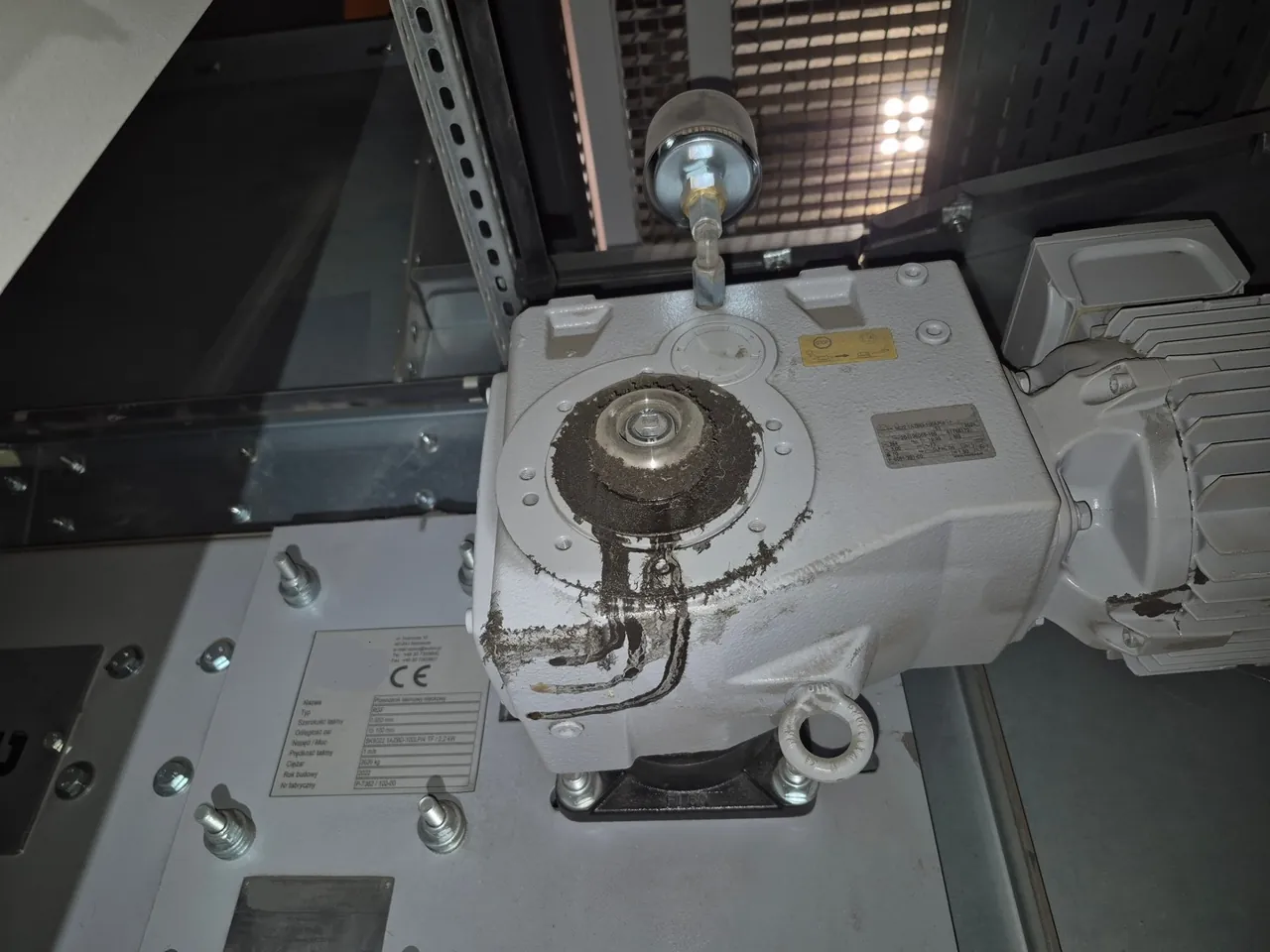
The most common oil leak points in a gear unit
In service practice, several typical zones can be identified where oil appears most often.
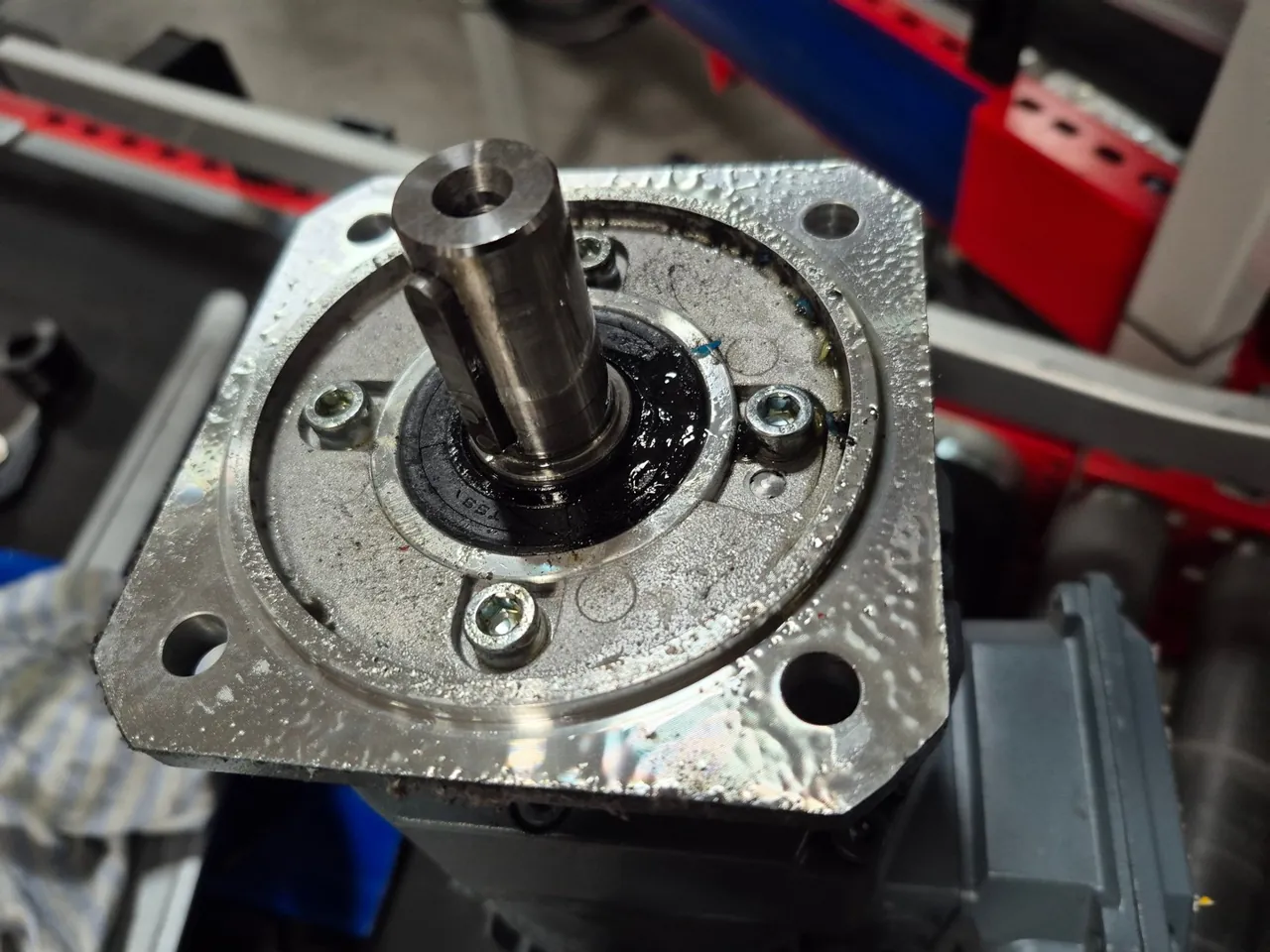
The first is the area around the output shaft. This is where the rotary shaft seal operates, constantly exposed to movement, contamination and varying temperatures. If traces of oil are visible at the hub, the shaft or near the coupling, this is the area to check first.
The second typical location is the input shaft, especially in highly dynamic applications or after previous motor disassembly. NORD points out that separating the motor and the gear unit during diagnosis may require a new seal afterwards, which shows how sensitive this zone is.
The third zone is the venting. If the transport lock has not been removed or the breather is clogged, pressure can build up inside the gear unit and the oil will start escaping by another route. This is one of the items manufacturers list directly on the leak checklist.
It is also worth checking cover joints, plugs and service points. Leakage can appear after an oil change, after changing the mounting position, or after components were incorrectly tightened during earlier servicing. With larger industrial gear units, the risk also increases where the system runs under load and at high temperature for long periods.
How to quickly locate the source of a leak
First, you need to distinguish old, dirty deposits from an active leak. It is best to start by thoroughly cleaning the housing and the areas around the shafts, then run the drive for a controlled period and observe where a fresh trace appears.
With such symptoms, we recommend checking several inspection points:
- oil level,
- condition of the seals,
- correctness of the mounting position according to the manual,
- operating temperature,
- ambient conditions and the condition of the venting.
In diagnostic practice it is also helpful to establish whether the oil appears:
- only during operation,
- after a standstill,
- after the drive warms up,
- at a specific load or direction of rotation.
If the leak intensifies only after warming up, the suspicion usually falls on increased pressure, an overfilled gear unit or worn seals. If the oil appears mainly in a heavily contaminated area, damage to the sealing lip by dust or foreign bodies should be considered. NORD explicitly states that foreign particles in the environment can lead to leakage at the seals.
Another good step is reading the name plate. The geared motor's installation position is marked on the name plate, and the type of oil also follows from the manufacturer's designations. This matters because an incorrect mounting position or the wrong lubricant can directly lead to a leak.
Can you keep operating with a small oil leak?
Technically, a drive with a small leak may still run. Operationally, however, it is risky.
The biggest problem is that a small leak rarely stays small for long. Oil loss can lead to poorer lubrication of the gear wheels and bearings, higher temperatures, noise and accelerated wear of the gear unit. When contaminants additionally get inside, the risk of damage increases even further.
There are also safety and maintenance considerations. Oil on the housing can contaminate the surroundings, worsen health and safety conditions and make it harder to assess other failure symptoms. In production installations this often means a higher cost of downtime later than the cost of a quick intervention earlier.
That is why the sensible approach to an oil leak from a gear unit is simple: do not wait for the leak to “stabilise” on its own, but carry out an oil level check, an assessment of the cause and a service decision. In its service materials, NORD lists regular visual inspection for damage, wear and leaks as part of preventative drive maintenance.
Replacing seals and repairing the gear unit
The scope of the repair depends on what actually caused the problem. If only the NORD seals — or their equivalents selected for the application — are at fault, sometimes replacing the rotary shaft seal, checking the shaft surface and topping up or changing the oil is enough.
If, however, the leak results from overheating, an incorrect installation position, clogged venting or overloading, replacing the rotary shaft seal alone will not solve the problem. The root cause must be eliminated, otherwise the leak will return very quickly.
In more advanced cases, geared motor repair includes:
- disassembly and inspection of the gear unit,
- checking the bearings and gear wheels,
- assessing the wear of the shaft journals,
- replacing the seals,
- changing the oil,
- verifying the installation position and operating conditions.
SPEC SERWIS offers comprehensive inspection and repair of geared motors, oil changes and drive condition assessment, the rectification of faults such as leaks, and thermal imaging and endoscope inspections. This is particularly important when you need not only to remove the symptom but to find the real cause of the failure.
It is also worth remembering that SPEC SERWIS acts as sales and technical support in contact with NORD and provides advisory assistance in selecting solutions and parts for a given drive.
How to prevent oil leaks in the future
The most effective method is combining correct installation with regular monitoring of the drive's condition.
The basis is always compliance with the manufacturer's documentation: the correct installation position, the right oil level, the appropriate type of lubricant and clear venting. NORD states that these elements should be checked first, both in the event of a leak and when the temperature rises.
The working environment is equally important. Direct sunlight, high ambient temperature, dust and aggressive contamination accelerate seal ageing. In such conditions, inspections must be carried out more frequently and sealing solutions selected for the real application.
A good practice is regular visual inspections. Even a quick check of the housing, shafts and service areas allows a problem to be caught at the seepage stage, before a major failure occurs. In maintenance terms, this is usually the most cost-effective moment to react.
From the plant's perspective, it is also important not to change the drive's mounting position on your own without verifying the oil quantity and the gear unit configuration. The manufacturer clearly states that operation in a version other than the one ordered can lead to damage.
If an oil leak from a gear unit appears in your installation, treat it as a signal for quick fault diagnosis. For many plants, the best solution is not guessing the cause, but an inspection carried out by a team that knows NORD drives, their quality standards and typical damage scenarios. SPEC SERWIS has service experience, access to parts and support in contact with the manufacturer, so it can help both with diagnosis and with planning a sensible repair.
FAQs
Below you will find answers to the questions that most often appear in service requests concerning drive leakage.
Does an oil leak from a geared motor always mean a serious failure?
Not always, but it always requires checking. Sometimes the problem is only a worn rotary shaft seal or too high an oil level, but without diagnosis it is difficult to rule out overheating, overloading or an incorrect installation position.
Where does an oil leak from a gear unit most often appear?
Most often around the output shaft, the input shaft, the venting, and at the plugs and housing joints. These are the places to inspect first after cleaning the drive.
Can you just top up the oil and keep running?
That is a makeshift solution and usually insufficient. Topping up the level alone does not remove the cause of the leak, and continued operation can deepen the damage to seals, bearings or gear wheels.
When do NORD seals need to be replaced?
When the rotary shaft seal is worn, damaged, hardened, or when the leak returns despite a correct oil level and installation position. When replacing it, it is worth checking the condition of the shaft, the venting and the operating temperature at the same time, so that the root cause is also eliminated.
How do I check which oil should be in a geared motor?
The type of oil and the fill quantity should be checked on the name plate and in the manufacturer's manual. The type of oil is marked on the name plate, and the change intervals follow from the operation and maintenance documentation.
When should a drive be reported for service?
Immediately when the leak recurs, the housing temperature rises, or noise, vibration or a drop in running quality appears. The earlier the diagnosis is carried out, the greater the chance of shorter downtime and lower repair costs.