News · Mikołaj Skubina · 15.04.2026
In mixing applications, the motor alone is very often not enough. When the system has to set a viscous medium in motion, run for long periods under varying load and transmit high torque safely, a correctly selected gear unit becomes the key element. In practice, this is exactly why heavier process applications so often use an agitator drive based on an industrial gear unit rather than a simple standard geared motor. From a selection point of view, it is not only power that matters, but also torque, axial and radial loads, operating conditions and the required service life of the entire assembly.
Requirements placed on an agitator drive
An industrial agitator usually operates in more demanding conditions than a classic conveyor drive. The load is not always constant. It changes with the viscosity of the medium, the tank fill level, the agitator geometry, the process temperature and the course of the technological reaction itself.
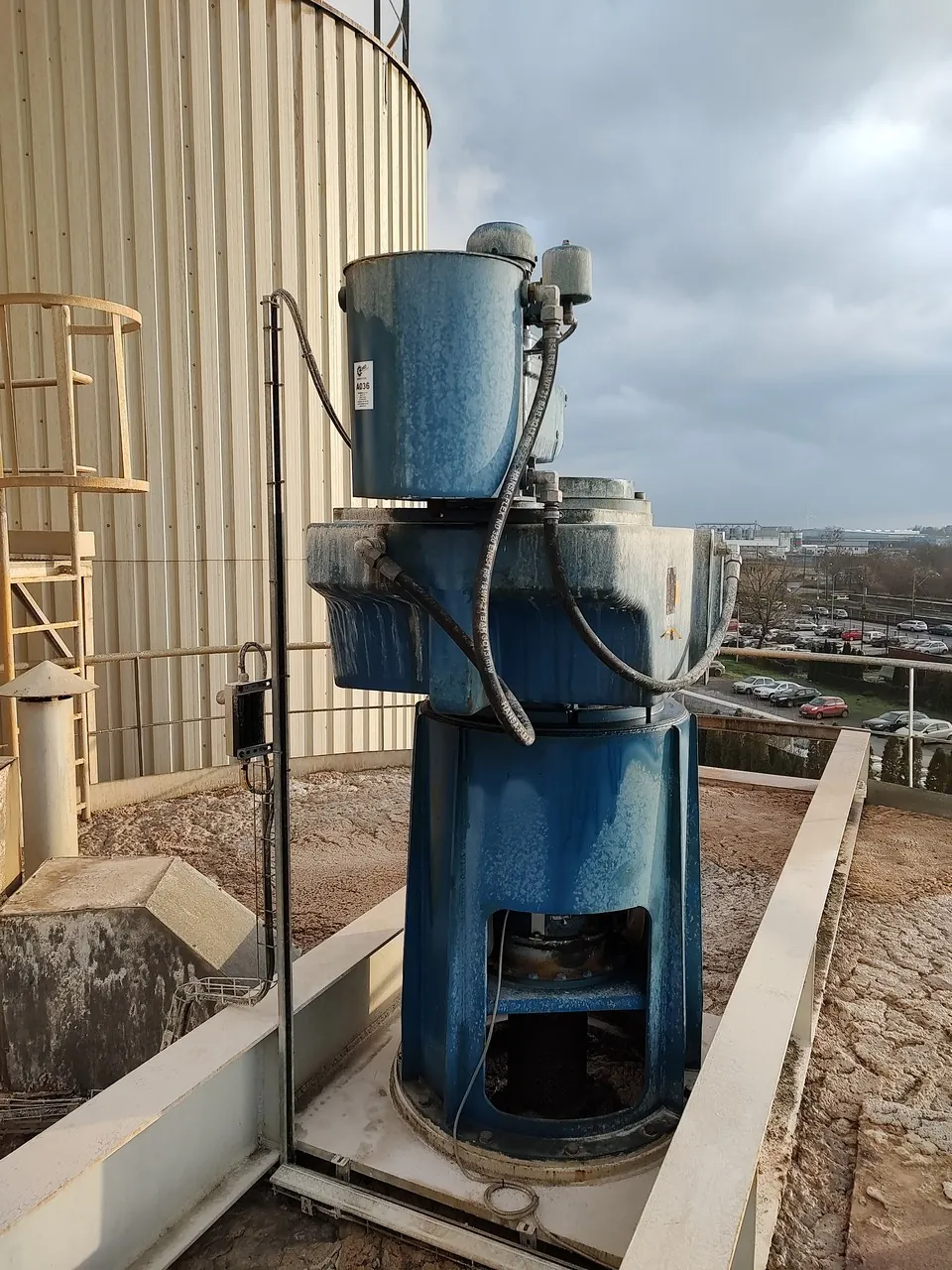
In practice, this means that the drive must not only rotate the shaft, but also maintain stable operation under the high forces acting on the system. In vertical agitator applications, the gear unit transmits not only torque, but often also the axial and radial loads resulting from the operation of the impeller. Manufacturers of agitator solutions state explicitly that it is precisely this ability to absorb such loads that distinguishes an agitator drive from simpler general-purpose systems.
In NORD materials, mixing and blending has been identified as an area of application for MAXXDRIVE industrial gear units, precisely because of the high output torques and the operating requirements of mixing applications. MAXXDRIVE industrial gear units are intended, among other things, for driving agitators, mixers, mills, drums and crushers.
In the heavy industry sector, the following must also be taken into account:
- long continuous duty cycles,
- starting under load,
- high system inertia,
- the possibility of temporary overloads,
- a difficult operating environment: dust, moisture, process chemicals, high ambient temperature.
It is precisely this set of requirements that determines whether a classic geared motor will suffice, or whether a full-size industrial gear unit will already be needed.
Why torque is crucial
In the case of agitators, the most common mistake is to look solely at the motor power. Yet in the real operation of the process, the decisive factor is often the high torque available at the output shaft at low speed.
The relationship between power, speed and torque is fundamental: as speed falls, the importance of torque grows. For rotary drives, the rated torque can be expressed by the formula T = 9550 × P / n, where T is the torque in Nm, P is the power in kW and n is the speed in rpm.
This matters because agitators generally do not run at high speeds. What they need is calm, controlled operation, but with high rotational force. The higher the viscosity of the medium and the larger the agitator diameter, the greater the demand for torque.
In addition, starting itself can be far more demanding for the drive than subsequent steady-state operation. Drive manufacturers' technical documentation emphasises that the accelerating torque must be greater than the load torque throughout the entire start-up range. Otherwise, the drive will start too slowly, overheat or fail to reach the set speed at all.
This is precisely where the advantage of industrial gear units becomes apparent. Official NORD materials state that the MAXXDRIVE series was designed for heavy-duty applications and offers output torques from 15,000 Nm to 282,000 Nm, which clearly illustrates the scale of applications in which standard solutions are simply too small.
Selecting a gear unit for industrial agitators
Selecting an agitator drive should start with process data, not with the available mounting space. First, the technological requirements must be defined, and only then can the drive architecture be selected.
The basic input data are:
- the viscosity of the medium and its variability over time,
- the required agitator speed,
- the diameter and type of impeller,
- the installation position,
- axial and radial loads,
- the duty type: continuous, cyclic, starting under load,
- ambient conditions and the expected service life.
For heavy mixing applications, the gear unit is usually selected to provide an adequate reserve of torque, bearing capacity and thermal resistance. In practice, overly aggressive selection "right at the limit" ends in higher temperatures, sealing problems, shorter bearing service life and higher downtime costs.
NORD points out that in agitator and mixer applications the company offers application-tailored solutions using MAXXDRIVE industrial gear units and the SAFOMI-IEC adapter. This solution is intended to increase reliability and reduce servicing costs by eliminating certain auxiliary components, lowering the oil volume and simplifying the connection design.
Where an application requires very high torques, high system rigidity and a better load-carrying capacity, a NORD industrial gear unit becomes the natural selection direction. In less demanding systems, an appropriately configured helical inline, helical bevel or parallel shaft geared motor may be sufficient. Parallel shaft drives are also used in agitators, but for the highest torques the dedicated group remains MAXXDRIVE industrial gear units.
Typical problems of agitator drives
Problems in agitator drives rarely begin with a failure of the gear unit itself. Most often, their source is an earlier selection error, improper operating conditions or neglected servicing.
Among the most common problems are starting overloads. In applications with a high-viscosity medium, the resistance at start-up can be much higher than during normal operation. If the drive does not have a sufficient torque reserve, thermal overloads of the motor occur, along with load spikes on the gear teeth and accelerated bearing wear.
The second typical problem is excessive axial and radial loads. In vertical agitators, the system often operates under forces that are not encountered in simple conveyor drives. This is precisely why manufacturers of agitator gear units emphasise the role of reinforced shafts and bearings, and in extreme loads even additional thrust bearings.
The third area of risk is lubrication and sealing. NORD emphasises that the use of the SAFOMI-IEC adapter makes it possible to reduce the number of components exposed to leakage and wear, including the radial seal between the gear unit and the IEC lantern. This directly translates into greater operational reliability.
In everyday plant practice, the following also come into play:
- incorrect gear ratio selection,
- an insufficient thermal reserve,
- an incorrect installation position,
- incorrect oil level and type,
- no monitoring of vibration and temperature,
- installation errors on the foundation and coupling.
SPEC SERWIS reiterates the importance of assessing the condition of geared motors, thermographic inspection, oil changes, reading frequency inverter parameters and verifying the installation position against the manufacturer's documentation. It is precisely such measures that usually make it possible to detect a problem before a costly failure occurs.
How to increase drive service life
The service life of an agitator drive does not depend solely on the quality of the gear unit itself. It is the result of the entire system: selection, installation, lubrication, control and the monitoring of operating conditions.
The greatest effect comes from a correct design margin. An agitator drive should be selected with regard to the real nature of the load, not only the nominal operating point from the process sheet. In heavy-duty applications, starting, temporary overloads and loads from the shaft and impeller are particularly important.
Equally important is control of the oil management. The oil type and change intervals must always be verified against the manufacturer's technical and operational documentation and the name plate. This is a seemingly simple detail, but in practice it has a direct impact on operating temperature, seal durability and gear unit service life.
Condition monitoring also matters greatly. In industrial plants, it is worth regularly checking:
- the temperature of the gear unit housing and the motor,
- the vibration level,
- tightness,
- oil condition,
- noise under load,
- drive behaviour during starting and changes in process parameters.
In applications with a frequency inverter, an additional benefit is a gentler start and better speed control. NORD frequency inverters enable smooth speed control and highly precise motor control while maintaining the full available torque. This is important wherever the mixing process requires stable operation over a wide speed range.
Example NORD solutions
In the area of mixing and agitation, NORD develops its range around MAXXDRIVE industrial gear units. The company points to these gear units as solutions for heavy-duty applications such as agitators, mixers, mills, drums and crushers. The output torque range extends from 15,000 Nm to 282,000 Nm, which corresponds to applications in which a standard geared motor no longer provides a sufficient reserve.
The second important element is the SAFOMI-IEC adapter, developed specifically for agitators. This solution increases operating reliability, reduces the required oil level and volume, simplifies installation and lowers maintenance costs. In practice, this is particularly significant wherever an agitator drive runs continuously and every leak or unplanned shutdown generates real production losses.
NORD materials also include specific implementation examples for agitators. In one reference for EKATO, a system was described with motors rated above 150 kW and industrial gear units with a nominal output torque of 242,000 Nm, designed to work with a very viscous medium and high loads on the agitator shaft. This clearly shows when switching to an industrial gear unit becomes a necessity rather than an option.
From the end user's perspective, it is also important that SPEC SERWIS does not position itself as an "off-the-shelf" seller, but as selection and consultancy support in contact with NORD. As a company, we help with drive selection, support the assessment of system condition, fault diagnosis, oil management and technical communication around NORD drives.
When an industrial gear unit is really needed
Not every agitator requires an industrial gear unit. But there are several situations in which such a choice is technically justified.
An industrial gear unit is usually needed when the application requires very high torque at low speed, operates under significant axial and radial loads, has a difficult start, runs continuously in a demanding environment or must ensure a long service life while minimising downtime. It is precisely in such cases that the MAXXDRIVE series and solutions such as SAFOMI-IEC are designed as drives specifically for mixing and agitation.
For plants in the heavy industry sector, this means one thing: the selection of an agitator drive must be treated as an element of process safety, not merely the cost of a component. An incorrectly selected gear unit usually does not fail immediately. First, it causes higher temperatures, shorter bearing life, sealing problems and a deterioration in process stability. Only later does a failure occur.
That is why, for such applications, it is worth approaching the subject from the angle of torque, loads and service life, and not just the motor power itself.
FAQs
Below you will find answers to the most common questions that arise when selecting an agitator drive in industrial plants.
Does every agitator need an industrial gear unit?
No. In lighter applications, a standard geared motor may suffice. An industrial gear unit is needed mainly where there is high torque, high medium viscosity, a difficult start or significant axial and radial loads.
What matters more in an agitator drive: power or torque?
In practice, torque very often turns out to be more important. Agitators usually run at lower speeds, so it is torque that determines whether the system will start under load and maintain stable process operation.
Why do agitators generate high loads for the gear unit?
Because the gear unit does not transmit torque alone. In many applications, it must also absorb the axial and radial forces coming from the agitator shaft and impeller. For this reason, agitator systems require reinforced shafts and bearings.
What does the SAFOMI-IEC adapter offer in NORD solutions?
According to NORD, SAFOMI-IEC increases reliability, lowers servicing requirements, reduces the oil quantity and simplifies the system design. This is particularly beneficial in agitator drives that run continuously under high load.
How can SPEC SERWIS help with such an application?
SPEC SERWIS provides consultancy support in selecting the solution, helps assess the operating conditions of the drive, verify operating parameters and organise technical contact with NORD. Company materials also show that the company carries out inspections, drive condition assessments, oil changes and fault diagnosis at the system's place of operation.
When is it worth checking an agitator drive before a failure occurs?
When there is a rise in temperature, unnatural noise, vibration, leaks, starting problems or a change in system behaviour after a change of medium. The earlier fault diagnosis is carried out, the greater the chance of avoiding downtime and a costly repair.