News · Mikołaj Skubina · 19.02.2026
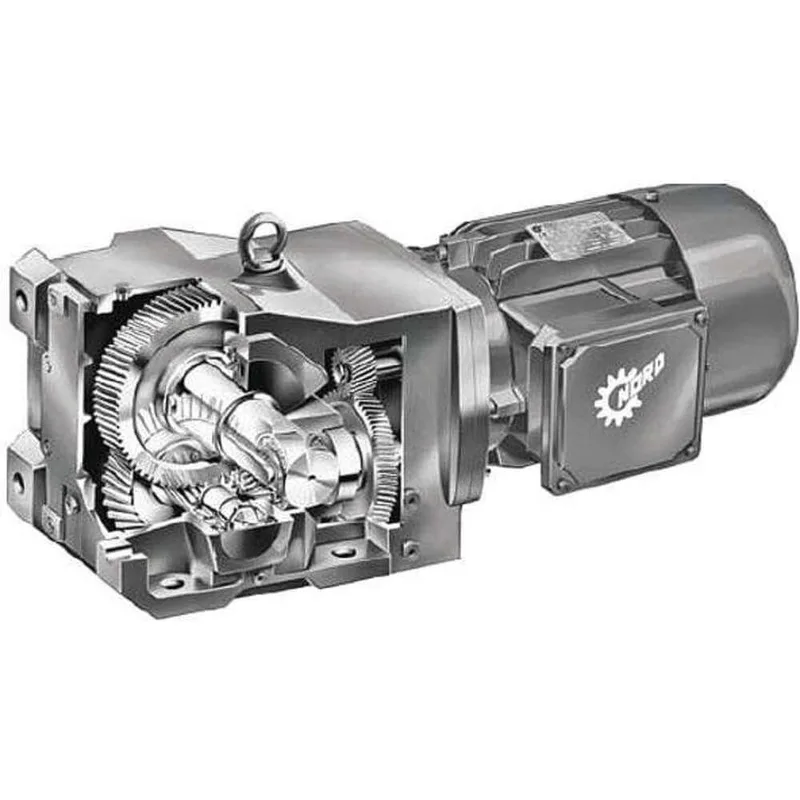
Proper lubrication of NORD gear units is one of the key factors determining the durability of the entire drive system. In practice, the question which oil to use in a NORD geared motor? is only the beginning. Just as important are the quantity of lubricant and the installation position (M1–M6), which directly affects the oil level in the housing.
In this guide, we explain how to select the oil, where to check its specification and why the installation position matters so much for drive operation.
How do you check which oil to use in a NORD geared motor?
Information about the type of oil can be found on the name plate of the gear unit or geared motor. The most common designation is, for example, CLP PG 220, which specifies the viscosity class and oil type.
The manufacturer's operating documentation (e.g. manual B1000) contains:
- recommended viscosity classes,
- tables of oil and grease alternatives,
- oil change times depending on operating conditions,
- oil quantities for individual gear unit sizes.
Oil should not be selected merely "by eye" or from general tables. The key factors are: operating temperature, load, speed and installation position.
NORD gear unit lubrication and the installation position (M1–M6)
This is an aspect that is most often overlooked in practice.
The installation position of a geared motor (e.g. M1, M2, M5) defines how it is mounted in space. This designation can be found on the name plate. Depending on the orientation of the housing, the following change:
- the oil level,
- the way the lubricant is splashed,
- the lubrication efficiency of the bearings and gearing,
- the quantity of oil needed for correct filling.
The same gear unit in position M1 may require a different oil quantity than in position M5. If you change the position of the drive without correcting the oil level, you may cause:
- insufficient bearing lubrication,
- overheating of the gear unit,
- oil foaming,
- leaks through the seals.
Changing the installation position should always involve re-verifying the quantity and type of oil.
How much oil in a NORD gear unit? Why the quantity matters
Too little oil causes insufficient lubrication and accelerated wear of the gearing. Too much leads to a rise in temperature, power losses and overpressure in the housing.
The oil quantity is influenced by:
- the size and type of gear unit (helical, helical bevel, worm),
- the input speed,
- the installation position (M1–M6),
- environmental conditions (temperature, dust, humidity),
- the operating mode (continuous / intermittent).
In applications such as a conveyor belt, agitators or intralogistics systems, where drives operate continuously, checking the oil level should be part of planned drive maintenance.
Drive maintenance – when to change the oil?
The manufacturer specifies the oil change times in the technical documentation. In practice, the following should be taken into account:
- operating time (number of hours),
- ambient temperature,
- the presence of contaminants,
- shock loads.
In applications with elevated dust levels or in the food industry, oil quality checks should be carried out more frequently than the manufacturer's minimum requirements.
A regular oil change is the cheapest way to protect a gear unit against a costly failure.
Professional oil inspections – when is it worth commissioning specialists?
In industrial practice, simply "topping up" the oil is not enough. During a professional inspection, the following are assessed:
- the condition of the oil (colour, smell, presence of metal particles),
- the tightness of the seals,
- the operating temperature (e.g. with a thermal imaging camera),
- the correctness of the installation position,
- the compliance of the lubricant used with the documentation.
SPEC SERWIS carries out comprehensive geared motor inspections, including oil changes, assessment of the gear unit condition and verification of the correct installation position. When a production line is modernised, it is also possible to change the geared motor's installation position together with adjusting the lubricant quantity.
This is particularly important in production plants, where even a short downtime generates real losses.
The most common mistakes in NORD gear unit lubrication
In service practice, we most often encounter:
- the use of the wrong viscosity class,
- mixing oils with different bases,
- failing to correct the quantity after changing the installation position,
- extending oil change times beyond the manufacturer's recommendations,
- ignoring leaks from the seals.
Each of these mistakes shortens the service life of the gear unit and can lead to a costly repair.
Find out more
Which oil for a NORD geared motor? A complete maintenance guide
NORD geared motor failure? See the most common causes and solutions
Comprehensive NORD Drive Solutions – SPEC SERWIS Authorised Partner
FAQs – oils and lubrication in NORD geared motors
Below we answer the most common questions about oil selection and drive maintenance.
Can the installation position of a geared motor be changed without an oil change?
It is not recommended. Changing the position (e.g. from M1 to M5) affects the required oil level. After such a modification, the lubricant quantity should be checked and, if necessary, the oil changed in accordance with the manufacturer's documentation.
Where can you find information about the type of oil?
The type of oil can be found on the geared motor's name plate. Detailed information and alternatives are available in the manufacturer's technical manual.
How often should an oil inspection be carried out?
The frequency depends on the operating conditions. In heavily loaded or continuously operating applications, regular checks of the oil condition are recommended, even if the oil change time has not yet come.
Can any gear oil be used?
No. The oil must meet the manufacturer's requirements regarding viscosity class, base type and operating parameters. Using a random alternative can lead to gear unit damage.
Summary
The question "NORD geared motor – which oil?" is only part of the issue. Just as important are:
- the correct quantity of lubricant,
- compliance with the installation position (M1–M6),
- regular checks and maintenance of the drives.
If you are not sure whether your drive is operating under proper lubrication conditions, it is worth arranging a professional oil inspection. In practice, this is the simplest way to extend the service life of the gear unit and avoid unplanned production downtime.