News · Mikołaj Skubina · 05.02.2026
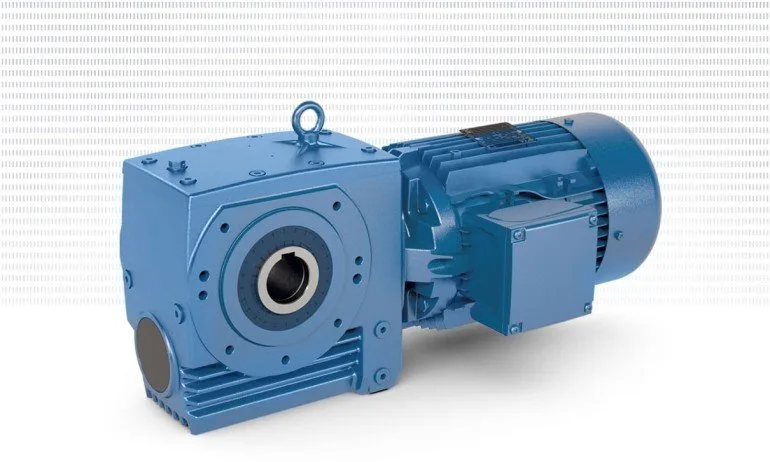
A geared motor in a production plant is not just a matter of motor power. In practice, the decisive factors are: output torque, gear ratio, the nature of operation, environmental conditions and the method of control. A poorly selected drive in bulk material or heavy component handling applications means downtime, overheating and accelerated wear of the gear unit.
In this article we show how to approach selection in real industrial conditions and how a standard geared motor differs from an industrial gear unit in high-load applications.
The role of the NORD geared motor in material handling systems
NORD Drive Systems is a manufacturer of mechanical and electronic drive technology solutions – geared motors, electric motors, industrial gear units and frequency inverters.
In applications such as a conveyor belt, a screw conveyor, a bucket elevator or agitators and dosing units, the drive must transmit high torque at a low output speed. A correctly selected gear unit is crucial here – most often helical, helical bevel or, in heavy-duty applications, a dedicated industrial gear unit.
Case study: a NORD geared motor for a 25 kW feeder in harsh conditions
Design assumptions
A production plant in the bulk materials industry. An 18 m screw conveyor transporting raw material with a high bulk density. Continuous 24/7 operation, dust, high ambient temperature (up to 45°C).
Input parameters:
- Motor power: 25 kW
- Required output speed: 32 rpm
- Torque at the output shaft: > 8,000 Nm
- Starting under load
- Control via a frequency inverter
Technical analysis
In this case, a standard helical inline geared motor proved insufficient due to the high starting torque, the large radial forces on the output shaft and the need for continuous operation in harsh conditions.
A solution based on an industrial gear unit from the MAXXDRIVE series, combined with a 25 kW asynchronous motor and a NORD frequency inverter, was used.
The result: stable operation without overloads, a lower gear unit operating temperature and an extended service life of the bearings and seals.
Standard geared motor vs industrial gear unit – the key differences
In practice, the question often arises: is a classic geared motor enough, or is an industrial gear unit needed?
1. Design and strength
Standard geared motor: compact design, smaller dimensions, torques usually up to several tens of thousands of Nm, ideal for conveyor belts and lighter applications.
Industrial gear unit: heavy-duty construction (e.g. a UNICASE housing), large roller bearings, very high output torques, designed for continuous, heavy loads.
2. Resistance to environmental conditions
In dusty and humid environments, the following are crucial: appropriate shaft seals, the selection of the gear oil (in accordance with the name plate and technical documentation) and a temperature monitoring system.
In heavy industrial applications, NORD industrial gear units provide a greater safety reserve and longer service intervals.
3. Integration with drive electronics
In 25 kW applications, a frequency inverter, soft start, torque control and operating parameter diagnostics are used more and more often.
Modern NORD frequency inverters allow smooth speed regulation while maintaining full torque. In the case of feeders, this is crucial under variable loads.
How do you select a drive for a feeder in a production plant?
The selection should not be based solely on motor power. In practice, we analyse:
- The nature of operation (continuous, cyclic, starting under load).
- The required output torque and gear ratio.
- Environmental conditions (temperature, dust, humidity).
- The method of control (3-phase frequency inverter, motor starter, soft start).
- Radial and axial loads on the output shaft.
The most common mistake? Selecting "right on the limit" with no torque reserve and no analysis of the real dynamic load.
This is exactly why, in projects for production plants, technical support at the concept stage is crucial.
The role of SPEC SERWIS in the selection of NORD drives
SPEC SERWIS provides technical and consultancy support for the selection of NORD drive systems. Thanks to our experience working with this brand's drives and direct access to spare parts and manufacturer documentation, we:
- analyse the operating conditions,
- help select the right type of gear unit,
- verify the geared motor's installation position,
- advise on the selection of oil and operating parameters,
- support contact with the manufacturer.
SPEC SERWIS does not deal with pneumatic drives – we focus on mechanical and electrical drive technology.
In applications such as drives in large production plants, practical knowledge is crucial – not just catalogue parameters.
Find out more
Geared motor for a 25 kW feeder and other applications – selection step by step
Comprehensive NORD Drive Solutions – Authorised Partner SPEC SERWIS
Overview of NORD series: From the SK1SI50 to powerful industrial units
FAQs – the most common questions about a drive for a 25 kW feeder
Below we answer the questions that most often arise when selecting a drive for feeders and conveyors in heavy industry.
Will a 25 kW NORD geared motor always be sufficient for a screw conveyor?
No. The 25 kW power rating alone does not determine a correct selection. The key factors are the required torque at the output shaft and the starting conditions. In some cases, an industrial gear unit will be necessary instead of a standard geared motor.
When should you choose an industrial gear unit instead of a classic geared motor?
When there are very high output torques, large shock loads, 24/7 operation in harsh conditions and a need for a long service life without frequent downtime.
Is a frequency inverter necessary in a 25 kW application?
In most modern installations, yes. A frequency inverter enables a soft start, speed control and protection of the mechanics against overloads.
How important is the geared motor's installation position?
Very important. The installation position (e.g. M5) affects how the gear unit is lubricated and must comply with the manufacturer's documentation. An incorrect position can lead to insufficient lubrication and a shortened service life.
Summary
Selecting a drive for a 25 kW feeder is an engineering process that requires an analysis of torque, gear ratio, the nature of operation and the environment. The difference between a standard geared motor and an industrial gear unit can determine many years of failure-free operation – or costly downtime.
In heavy industrial applications, it is worth opting for solutions based on NORD industrial gear units and a properly configured drive electronics package.
SPEC SERWIS supports production plants in the selection of such solutions – technically, through consultancy and in direct contact with the manufacturer.